


Crop and Application Matrix

Match tool families to the work on your ground

EGO Power applications span market gardens, orchards, nurseries, livestock yards, and municipal routes. Use the matrix below to connect scene needs with mower, chainsaw, sprayer, and attachment recommendations.

Scenario
Operational need
Recommended tool family
Row crop edges & farm lanes Farm lane mowing beside row crops

Weekly turf and weed pressure along access lanes; crews need quiet starts near livestock and housing.

  • Cutting width 21–42 in
  • Shared 56V packs
  • Bagging for debris control

Push and zero-turn mower kits; brush cutter attachment for fence corners.

Inquire mower kits →
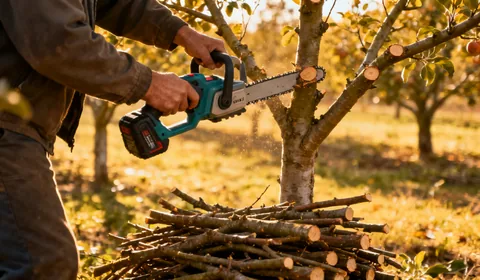
Orchards & woodlot edges Orchard pruning with battery chainsaw

Seasonal pruning and storm cleanup where fuel engines complicate early-morning work near dwellings.

  • 12–18 in bars
  • Chain kit staging
  • Low-noise starts

Battery chainsaw kits with spare chains and bar oil routines documented in the field service plan.

See parts coverage →
Nurseries & greenhouse perimeter Nursery perimeter trimming

Tight aisles, irrigation lines, and shade screen zones require controlled cutting and spot spray without heavy equipment.

  • Compact decks
  • Spray drift control
  • Attachment heads

Compact mowers, backpack sprayers, and cultivator attachments for bed edges and container blocks.

Inquire nursery kits →
Livestock yards & paddock fences Brush clearing along livestock fence

Fence-line vegetation and manure-adjacent weeds demand durable cutters and fast parts response when a head fails mid-week.

  • Brush cutter heads
  • Wear-part kits
  • Dealer escalation

Power heads with brush cutter attachments plus staged line and blade kits under the field service window.

Review service specs →
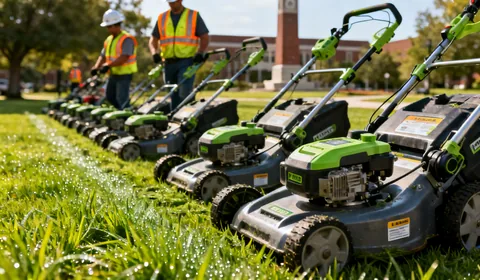
Municipal grounds & campus turf Municipal grounds crew with cordless mowers

Route-based mowing with quiet-hour constraints and multi-operator handoffs across a shared battery pool.

  • Zero-turn throughput
  • Charge-station layout
  • Operator checklists

Zero-turn and tractor kits with commissioning visits and mid-season inspection bookings.

Book a review →

Selection trade-offs

Two decisions that change which EGO Power kits you shortlist

We document both sides so procurement can choose deliberately instead of defaulting to brochure photos.

Backpack sprayer vs boom sprayer for fragmented plots

Backpack side: Better for nursery aisles, market-garden beds, and greenhouse perimeters where spray drift control and wand reach matter more than hectares-per-hour. Tank capacity around 4 gallons keeps fertigation-adjacent spot passes manageable for one operator.

Boom side: Higher throughput and more mature rate control on contiguous row-crop fields, but boom width and ground clearance are a poor fit for container blocks and shade screen edges. EGO Power backpack kits are not a substitute for a 24 m boom program on open fields.

Cordless 56V fleets vs fuel engines for farm lanes

Cordless side: Quiet morning starts near livestock yards and dwellings, shared battery pools across mowers and chainsaws, and no fuel mixing—useful when GLOBALG.A.P. buyers ask for cleaner maintenance trails.

Fuel side: Longer continuous runtime without charger planning on remote woodlots. Cordless decks still need mapped charge circuits; a single 20-amp bay cannot feed six concurrent zero-turn starts after a wet week.

Related farm-system debates—glass vs polycarbonate greenhouse glazing, drip vs center pivot irrigation—sit outside the hand-tool RFQ. When greenhouse perimeter work is in scope, note polycarbonate panel houses and shade screen schedules so spray drift control and corrosion notes match the environment.

Operating boundaries

Where EGO Power tool kits are not the right fit

Need a matrix tailored to your crop plan?

Share acreage maps, pruning calendars, and spray frequency. We return a tool-family shortlist with commissioning and parts notes.

Request Application Matrix